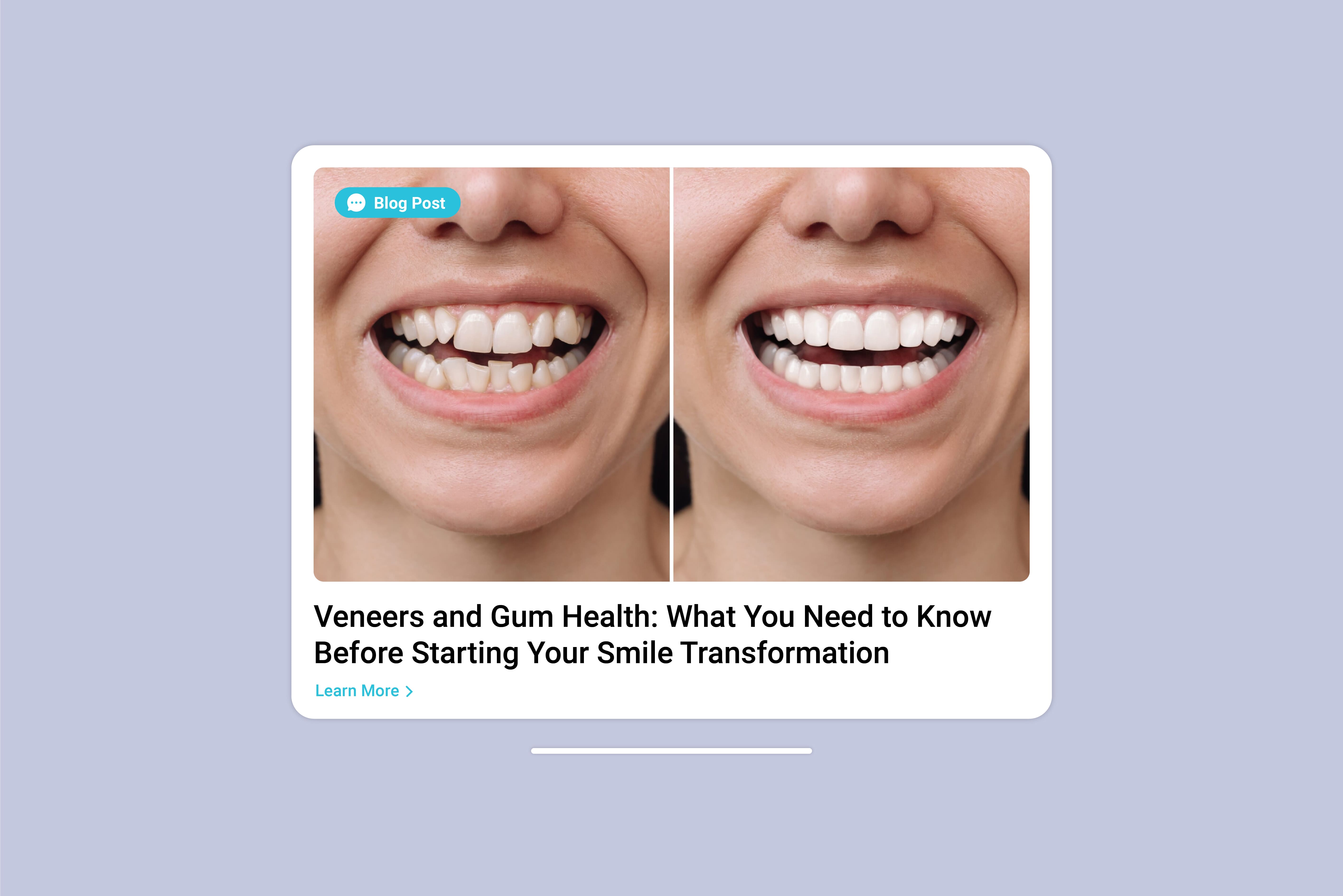
Most veneer conversations focus on shape, shade, and how the final smile will look. Gum health rarely comes up, even though it plays a bigger role in the outcome than most people realize.
Here's the truth behind a few common assumptions about veneers and gum health, and what actually matters before you start treatment.
Myth: Gum Health Doesn't Affect Veneer Treatment
The Reality
Healthy gums are part of the foundation veneers are built on. Inflamed or receding gum tissue can change how a veneer fits, looks, and holds up over time.
Myth: You Can Get Veneers Even With Active Gum Disease
The Reality
Active gum disease typically needs to be treated and stabilized first. Inflamed tissue can affect the fit and compromise long-term results.
Myth: Veneers Always Look The Same Regardless Of Gum Position
The Reality
The position and shape of your gumline directly affects how veneers look once placed. Uneven margins or recession can influence the final appearance, sometimes more than the veneer itself.
Myth: Gum Recession Isn't Something To Worry About With Veneers
The Reality
Recession can expose the edge of a veneer over time, creating a visible line or gap that wasn't there initially. Thin gum tissue, aggressive brushing, and untreated gum disease all raise this risk.
Myth: Veneers Don't Need Special Gum Care Afterward
The Reality
Veneers sit directly against your gumline, so consistent care there matters just as much after treatment as before:
- Brushing gently along the gumline without aggressive pressure
- Flossing daily around veneer margins
- Keeping up with regular cleanings to monitor gum health
- Addressing bleeding or swelling promptly rather than waiting
Myth: If My Gums Look Fine, There's Nothing To Check
The Reality
Some gum issues aren't visible to the naked eye. A periodontal exam measures pocket depth and identifies early inflammation that might not be obvious in the mirror.
What A Proper Veneer Consultation Should Include
A thorough consultation looks at your bite, tooth structure, and gum health together, not just the cosmetic outcome.
FAQs
Can I get veneers if I have receding gums?
It depends on the extent of recession. Your dentist can evaluate whether your gum health supports placement.
Will veneers make my gum health worse?
Not if properly placed and maintained, though poor hygiene around them can contribute to issues over time.
How do I know if my gums are healthy enough for veneers?
A periodontal exam is the most reliable way to assess this.
What happens if gum disease is found during my veneer consultation?
Your dentist will likely recommend treating it first.
Do veneers require different brushing or flossing habits?
Not drastically different, but gentle, consistent care along the gumline matters.


